Overview
This Business Analysis project was conducted for a family-operated
catering business. Customer conversations were
handled directly by the owner, who also needed to manage food
preparation, events, and daily operations. Delayed responses
created a risk of missed leads before a conversation could progress.
The Challenge
The business needed a way to respond faster to common questions
without removing the personal interaction that matters when
customers are planning an event or placing a catering order.
• Repetitive questions about menus, pricing, availability, and delivery.
• Delayed responses during food preparation and event operations.
• No consistent process for collecting lead details.
• Limited visibility into which inquiries were serious buying opportunities.
Discovery & Requirements Gathering
I reviewed historical WhatsApp conversations, interviewed the
operational team, and observed how inquiries were handled during
daily operations. The goal was to identify which steps could be
automated and which conversations still required the owner’s judgment.
Methods used
• Stakeholder interviews
• WhatsApp conversation analysis
• Pain-point mapping
• Direct observation of the order-handling workflow
Key Insights
Approximately 80% of customer messages followed recurring
patterns around menu options, pricing, and availability.
The owner did not want a fully automated sales process. The
priority was to filter routine questions, collect useful details
early, and hand over qualified leads at the right moment.
The Solution
I designed a WhatsApp chatbot flow that handled the first stage
of the customer journey while preserving a clear handoff to the
owner for closing and special requests.
The flow was designed to:
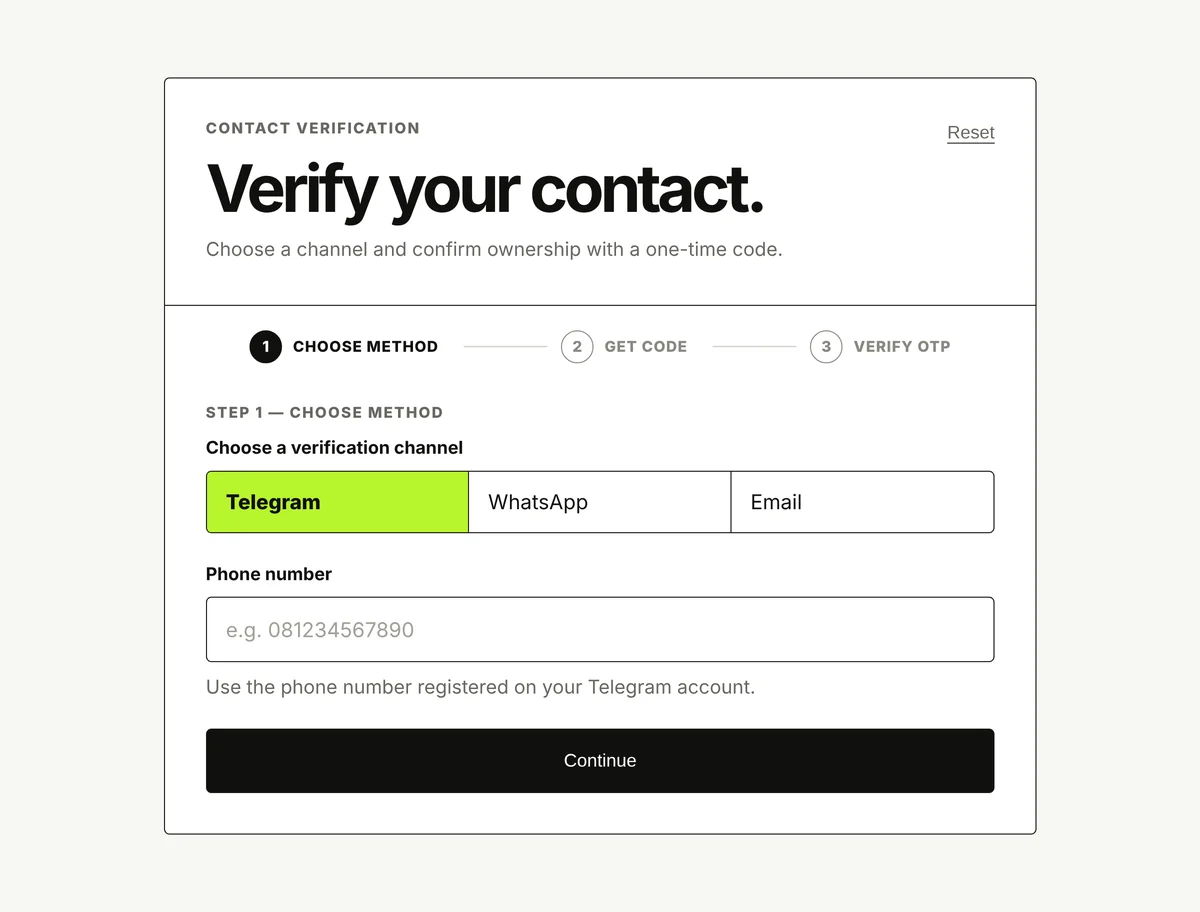
1. Identify the customer’s intent early.
2. Collect essential lead details, such as name, event date, location, and guest count.
3. Provide relevant menu and pricing information.
4. Route qualified inquiries to the owner for follow-up and order confirmation.
Conversation Logic
The conversation was structured around the questions customers
asked most often, with clear options and a lead-capture sequence
that reduced unnecessary back-and-forth. The owner received more
complete information before taking over the conversation.
View Conversational Diagram
Impact
The chatbot reduced the time spent answering repeated questions
and created a more consistent way to capture incoming leads. It
also helped the owner focus on qualified prospects, event
coordination, and order closing.
| Metric | Before Chatbot | Observed during initial operating period |
|---|
| Average first-response time | Around 3 hours | Under 2 minutes |
| Weekly inquiries handled | Approximately 10 | More than 40 |
| Owner involvement | Fully manual | Qualified lead follow-up and order closing |
| Answer consistency | Unstructured | Standardized first-response flow |
Results reflect observations from the initial operating period and
are not presented as an ongoing service-level guarantee.
Closing
This project shows how lightweight automation can improve a
small-business workflow without making the customer experience
impersonal. The goal was not to replace the owner’s role, but to
make their time more useful.
Try the live experience
Visit the website to explore the ordering flow and chatbot experience.